
How the Gulf Conflict Is Rewriting the Economics of War
On September 14, 2019, eighteen drones and seven cruise missiles struck Saudi Aramco’s Abqaiq facility and the Khurais oil field. The attack knocked out 5.7 million barrels per day — over half of Saudi production and roughly 5% of global supply. Oil prices spiked 15% overnight. Then Aramco restored output within two weeks. Policymakers, analysts, and markets internalized what turned out to be a flawed lesson: Gulf energy infrastructure can absorb major strikes and recover quickly.
That lesson is being stress-tested in real time.

Since February 28, 2026, when US and Israeli strikes on Iran triggered a full Iranian retaliation campaign, the Gulf has seen attacks — sustained, widening, and structurally different from anything the region has absorbed before. Iran is now launching the equivalent of the entire 2019 Abqaiq strike package in a single morning, and has maintained that pace for weeks. The concern is no longer whether Gulf infrastructure is vulnerable. It is what that vulnerability has already set in motion.
Volume as Strategy
In 2019, billions of dollars’ worth of Saudi air defence systems were defeated by drones that may have cost as little as $15,000 each. The attack succeeded partly through surprise as defence systems were pointed the wrong way, and operators were underprepared.
Six years later, there is no element of surprise, and the attacks are still landing. What changed is volume. Russia’s aerial campaign in Ukraine refined this logic between 2022 and 2025. Average salvo sizes rose from roughly 100 munitions in 2022 to nearly 300 by 2025, while intervals between major strikes compressed from about a month to as few as two days. The strategic purpose was not to destroy Ukraine’s air defences in a single blow. It was to exhaust them over time. Ukraine’s interception rate against Shahed drones held at 94 – 97% through most of 2024 and early 2025, then dropped to 82 – 86% as volumes increased and drone variants evolved.
Iran absorbed that model. Cheap drones are designed to overwhelm air defences so that more advanced missiles can more easily reach their targets. This sequenced approach treats drone saturation and precision strikes as two phases of the same operation rather than alternatives. In the Gulf context, this means the daily drone waves against Saudi Arabia’s Eastern Province are not purely destructive in intent. They are attrition tools, designed to strain intercept inventories and degrade the response infrastructure over time.
Iranian Shahed loitering munitions cost between $20,000 and $50,000 per unit. Standard US interceptor missiles cost upwards of $4 million per shot. At scale, if an actor launches 1,000 drones at $20,000 each, the investment is $20 million. For the defence, even at $50,000 per interceptor, the bill reaches $50 million and that assumes near-parity pricing, not the actual cost gap. The arithmetic is straightforward. The attacker controls the cost structure. The defender absorbs it.
Saudi Arabia’s air defence inventory is finite. Iran’s drone production, even as US and Israeli strikes have degraded roughly 70% of Iran’s missile launchers, has continued to supply the operation.
Why Energy Infrastructure Is the Right Target
The Eastern Province is the most consequential fixed point in the global oil supply chain. Abqaiq stabilisation towers, which remove volatile gases from crude oil before transport, are tall, thin, exposed structures surrounded by flammable materials. A single hit on one tower can trigger fires that force the shutdown of the entire facility. This is a structural vulnerability that no amount of additional Patriot batteries fully resolves. Iran can choose when and where to concentrate its daily drone waves. Saudi Arabia must defend everything, everywhere, all the time.
The 2019 recovery benefited from peacetime conditions. Repair crews deployed immediately without security limitations. Specialised equipment was sourced globally without supply chain disruption. None of these conditions exist in March 2026.
Refineries compound the problem. When a drone strikes a processing facility, the damage targets the midpoint of the supply chain, eliminating the capacity to convert crude into usable products. A country can release millions of barrels from strategic reserves, but if refining capacity has been destroyed, those barrels sit in storage with nowhere to go. This is what happened at Ras Tanura in early March: two Iranian drones were intercepted near the facility, but debris from the interception caused a fire that forced a full shutdown. The refinery remained closed for sixteen days, removing 550,000 barrels per day of refining capacity, not through direct destruction, but through the rational judgment that operating under active drone threat was untenable.
The market has priced this threat accordingly. Brent crude was at $72 per barrel on February 27. By early March it was at $106 — a 40% increase in under two weeks. LNG prices rose by nearly 60% over the same period. Capital Economics forecast that if the conflict extends three months, Brent could average $150 per barrel over the following six months.
Hormuz as a Constraint
Hormuz has historically functioned as a deterrent reference but that function has changed. Iran attacked multiple commercial vessels in the Persian Gulf and near the Strait of Hormuz on March 11. Roughly 3,000 vessels are currently parked outside the strait and in the Gulf of Oman. The strait is not formally closed. It does not need to be. Iranian attacks on vessels transiting Hormuz have dramatically reduced traffic through the channel, through which about 20% of global oil and gas supplies transport. Insurance withdrawal has produced the practical result of closure without requiring Iran to announce one.

The energy exposure this creates is not evenly distributed. In 2024, 84% of crude shipments through Hormuz were destined for Asian markets. China receives a third of its oil through this corridor. Europe sources 12–14% of its LNG from Qatar through the same route. QatarEnergy suspended LNG production on March 2 after an Iranian drone attack, straining the global LNG market. The IEA’s planned release of 400 million barrels from member strategic reserves, including 172 million from the US, covers approximately 20 days of normal Hormuz flow. It stabilises markets temporarily. It does not restore the corridor, and it draws down a buffer that is not infinitely replenishable.
The macroeconomic read-through is direct. The IMF’s managing director warned on March 9 that a prolonged conflict poses inflationary risk to the global economy, with euro-zone inflation forecast to peak above 4% and US inflation above 3%. Asian stock markets have fallen more sharply than US markets, reflecting disproportionate energy exposure.
Where Capital Is Moving
The defence and energy sectors have moved predictably. Lockheed Martin hit an all-time high in the opening days of the conflict. Northrop Grumman shares jumped 6%. RTX, the parent of Raytheon, gained nearly 5%. Palantir rose almost 6%.
The more durable signal is in the structural demand shift this conflict is accelerating. Counter-drone and intercept technology represent the critical gap that every military watching this conflict is now actively trying to close. High-energy laser systems carry a cost per shot of roughly $13, compared with millions of dollars for missile interceptors. The global directed-energy weapons market is projected to more than double from $10.24 billion in 2023 to over $20 billion by 2031.
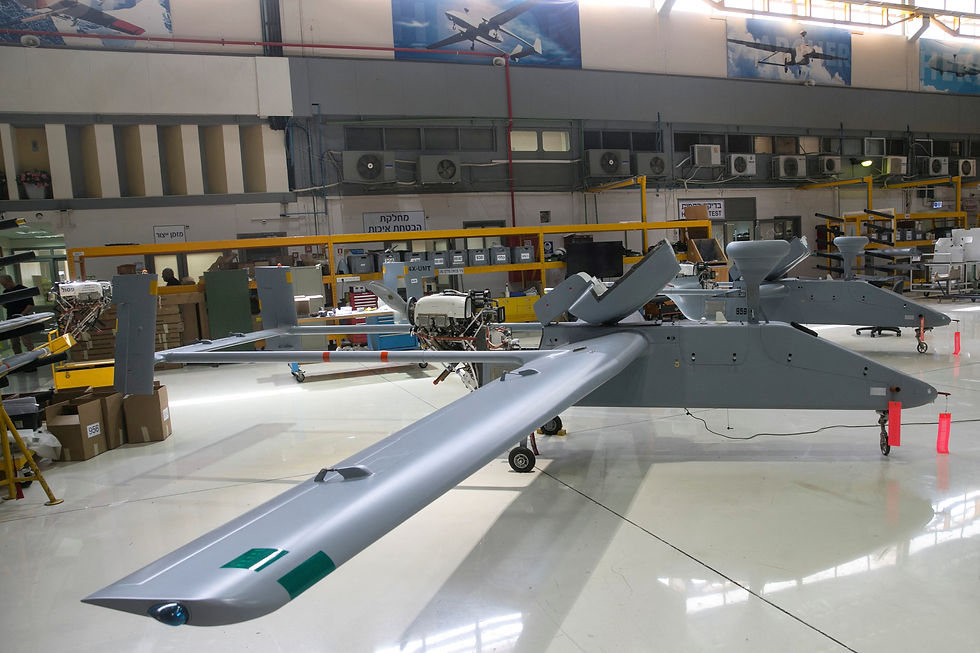
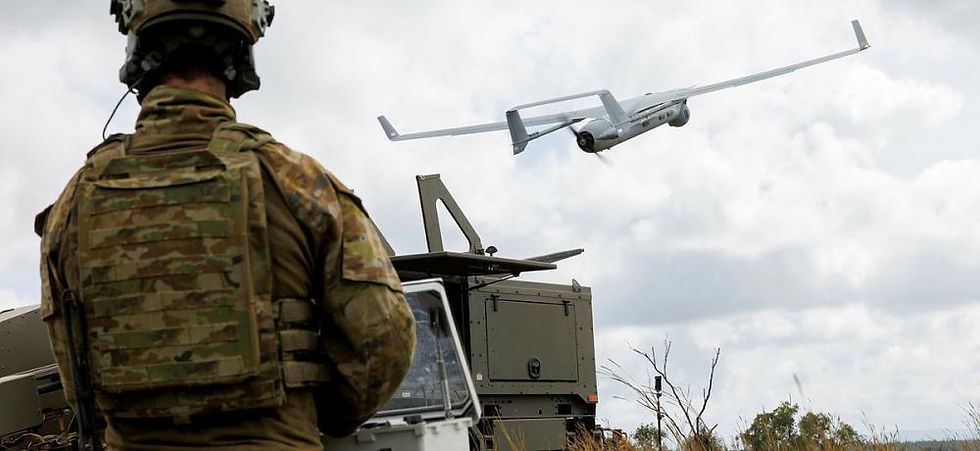
Israeli defence-tech firms are at the centre of this shift. Counter-UAS systems, autonomous surveillance platforms, and AI-guided fire control are being consumed at a pace that is reshaping revenue forecasts across Israel’s defence sector.
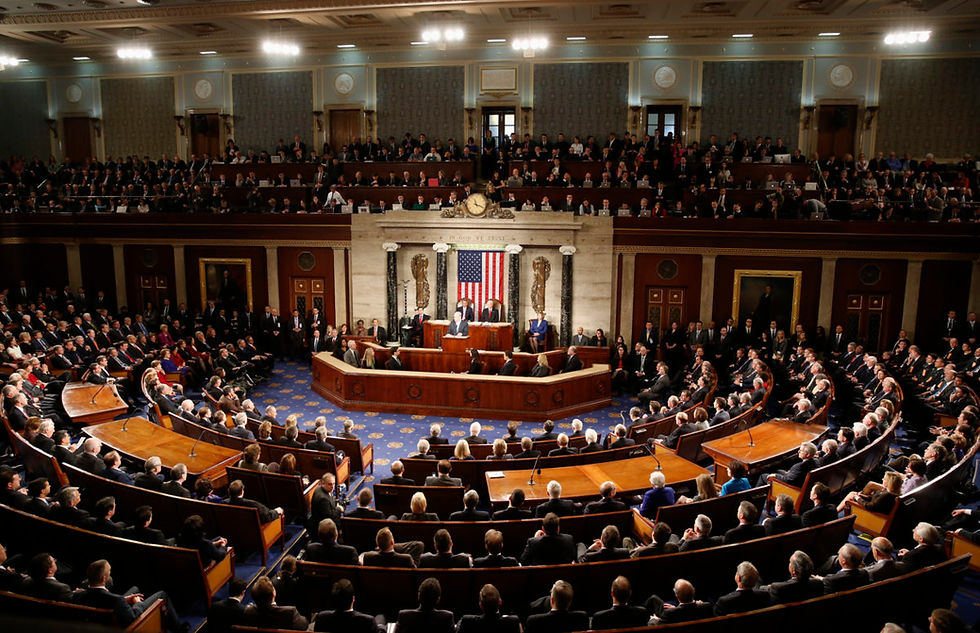
The largest US defence contractors have agreed to quadruple production of advanced weapons systems following a White House meeting. The US defence budget, already at nearly $1 trillion in 2025, is targeted to reach $1.5 trillion by 2027. That expansion was already in motion before February 28. The Gulf campaign has removed whatever friction remained in accelerating it.
The Structural Shift
The 2019 Abqaiq attack was a demonstration. The 2026 Gulf campaign is an execution. The difference is scale, persistence, the integration of drone saturation with infrastructure targeting, and the conversion of Hormuz from a rhetorical threat into an active constraint.
What Ukraine demonstrated about drone economics in European warfare, the Gulf is now demonstrating about energy infrastructure warfare. The model is the same: low-cost, repeatable systems against high-value, fixed assets, sustained long enough to compound the cost burden on the defending side. Ukrainian drones accounted for more than 65% of destroyed Russian tanks, validating what analysts describe as a fundamental disruption in the economics of warfare. The Gulf theatre applies that logic to a target set with global supply chain consequences rather than purely military ones.
The threshold for strategic disruption has already been crossed. Oil markets have repriced. Shipping has contracted. Refining capacity has been temporarily lost without infrastructure destruction. Defence procurement timelines are compressing across every state that watched this unfold. None of this requires the conflict to escalate further to matter. The effects on energy pricing, supply chain routing, insurance markets, and the economics of air defence are already in the system. Whether these prove temporary, or whether four weeks of sustained drone activity against the world’s most critical energy corridor have reset the assumptions that markets and governments have relied on since 2019, remains unclear. The evidence so far points toward the latter.
Comments