
Who’s Who in the War: The IRGC

The Islamic Revolutionary Guard Corps (IRGC) is one of Iran’s most powerful institutions. Established after the Iranian Revolution to safeguard the new order, it has grown into a multifaceted organization with military, political, and economic influence that extends across the Middle East.
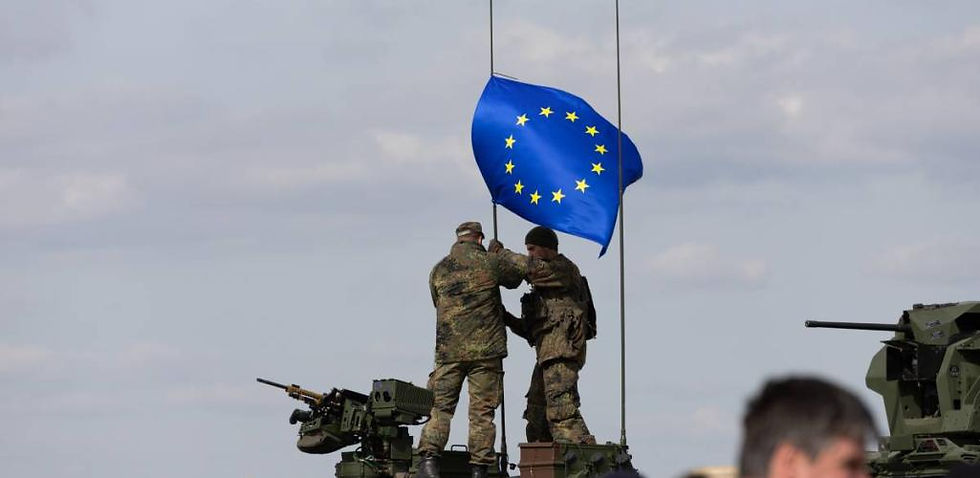
Recent events have intensified scrutiny of the IRGC. One reason is its significant role in the escalating war involving Iran, Israel, and the United States. In February 2026, the European Union added the organization to its terrorist list, imposing sanctions such as asset freezes and prohibitions on financial transactions with EU entities. For investors, IRGC-linked activities are now subject to greater legal and geopolitical risk. Understanding the organization’s structure and reach is therefore essential.
Origins and Institutional Role
The IRGC was formed during the revolutionary consolidation of power led by Ruhollah Khomeini. Article 150 of Iran’s constitution defines its purpose as safeguarding “the Revolution and its achievements.” From the outset, it was intended not merely as a military body but as the ideological guarantor of the new state.
Iran’s political system combines elected institutions with clerical oversight, with ultimate authority resting in the office of the Supreme Leader, who controls national security, foreign policy, and the armed forces.

In March 2026, following the assassination of Ali Khamenei during joint U.S.–Israeli strikes, Iran’s clerical leadership moved quickly to ensure continuity. The Assembly of Experts appointed his son, Mojtaba Khamenei, as the new Supreme Leader on 8 March 2026. The succession occurred amid a rapidly escalating regional crisis and marks the most significant leadership transition since 1989. For institutions like the IRGC, which report directly to the Supreme Leader, the change carries implications for internal power dynamics and the direction of Iran’s security policy.
Initially created to prevent coups and consolidate revolutionary authority, the IRGC has expanded its influence across governance, the economy, and regional security. Its ambiguous legal status, coupled with embedded institutional power, allows it to shape state decision-making and pursue objectives beyond traditional military concerns.
Structure and Operational Reach
The IRGC has dedicated land, naval, aerospace, and paramilitary branches, with estimates placing its active personnel at around 190,000.
The organization’s ground forces are deployed across Iran’s provinces and represent the largest component of its military structure. Its naval branch operates separately from the regular military, patrolling the Persian Gulf and the Strait of Hormuz, a chokepoint for a substantial portion of global seaborne oil. Its aerospace arm oversees Iran’s ballistic missile program, one of the most significant elements of the country’s deterrence strategy. The IRGC also commands the Basij, a mass mobilization force used to maintain internal security and enforce political loyalty.
The organization projects influence through its external operations branch, the Quds Force. This unit has cultivated a network of proxies across the region, including Hezbollah in Lebanon, Hamas and Palestinian Islamic Jihad in the Palestinian territories, and Iraqi militias such as Kataib Hezbollah. Through training, financing, and weapons transfers, the IRGC leverages these networks to extend Iran’s influence abroad while maintaining plausible deniability.

Missile Programs and Regional Deterrence
Over the past two decades Iran has invested heavily in developing one of the largest missile arsenals in the Middle East. Estimates by U.S. military officials have placed Iran’s missile inventory at over 3,000 systems, though recent conflicts have depleted portions of the stockpile. Despite these losses, Iran continues to focus on improving precision, maneuverability, and operational readiness.
This missile program has prompted longstanding international concern. Though the United Nations Security Council prohibits activities related to ballistic missiles capable of delivering nuclear weapons, the country continues to develop space launch vehicles that use similar technology. Missile and drone technologies have also been transferred to regional partners, notably the Houthis in Yemen, who have targeted infrastructure and commercial shipping in the Red Sea.
Economic Power
Alongside its military capabilities, the IRGC has developed a vast economic network spanning sectors such as construction, energy, shipping, manufacturing, and finance. The organization first entered the commercial sphere during the reconstruction period following the Iran–Iraq War, when it was tasked with rebuilding infrastructure damaged during the conflict.
A central component of this economic network is Khatam al-Anbiya Construction Headquarters. It is the IRGC’s primary engineering conglomerate. Established during the post-war era, the group now oversees hundreds of affiliated companies involved in highways, dams, pipelines, and offshore energy projects.
Revenue generated from IRGC-linked businesses funds operations and supports veterans and families of deceased personnel.
Implications for Investors
The IRGC’s multi-layered role creates complex risks for international stakeholders.
Commercial exposure: Foreign firms working in or with Iran may inadvertently encounter IRGC-linked entities, exposing them to compliance and sanctions risks.
Regional security: The organization’s support for proxy groups, combined with its missile capabilities, has contributed to periodic escalations that affect energy markets, trade routes, and investment climates.
Institutional complexity: The blurred boundaries between state institutions, military actors, and commercial enterprises complicate risk assessment. This increases the potential for indirect exposure to sanctioned networks.
Comments