
How Greece Is Responding to the Iran War
Greece's position in the Eastern Mediterranean has always created both exposure and opportunity — close enough to the region's fault lines to absorb their consequences, strategically placed enough to matter to the powers navigating them.
Six weeks before the US and Israel launched strikes on Iran, Greece delivered 13 M113 armoured personnel carriers and 10 military trucks to Lebanon’s armed forces. The transfer, completed on January 15, was coordinated between the Greek defence and foreign ministries. It was an effort by Athens to position itself as a reliable security partner in the Eastern Mediterranean before the region's largest crisis in decades had formally begun.
When the conflict started in February 28, Greece moved faster than any other European state. Within 48 hours of an Iranian Shahed drone striking the runway at RAF Akrotiri in Cyprus, Athens activated its Common Defence Doctrine with Nicosia and dispatched two frigates alongside four F-16 Viper jets to Paphos. A Patriot battery was simultaneously redeployed to the island of Karpathos, closing the air defence gap between the Greek mainland and Cyprus. Greek-operated Patriots also intercepted Iranian ballistic missiles over Saudi Arabia. Following a Bulgarian government request, another Patriot battery was relocated to Greece's northern border to extend missile defence coverage to its NATO neighbour.

The cumulative picture is of a country that has used the conflict to convert longstanding strategic relationships into operational ones. Greece has not contributed forces to the US-Israeli coalition, has not authorised its bases for offensive strikes, and formally declined to participate in the naval escort mission proposed for the Strait of Hormuz. Its official position is one of non-involvement. Yet it has deployed assets into an active theatre, serviced a US carrier strike group at Souda Bay, and maintained a Patriot battery inside a warzone.
This posture carries economic weight. Petroleum products account for more than half of Greece’s final energy consumption, and the country imports the vast majority of its crude oil and natural gas. Its primary crude import sources — Iraq, Kazakhstan, Libya, and Saudi Arabia — are all exposed to varying degrees of disruption from the conflict. Rising fuel costs are feeding through to shipping, aviation, and tourism, which contributes between 25% and 30% of GDP when direct and indirect effects are included. International arrivals at Athens airport were up 11.7% in early 2026 compared to the same period last year, though inflationary pressure on European households is tempering how much of that redirected demand Greece can fully capture.
Meanwhile, Greece controls 29.2% of global deadweight tonnage in oil transportation, the largest share of any country, and owns the largest fleet of oil tankers and LNG carriers available.
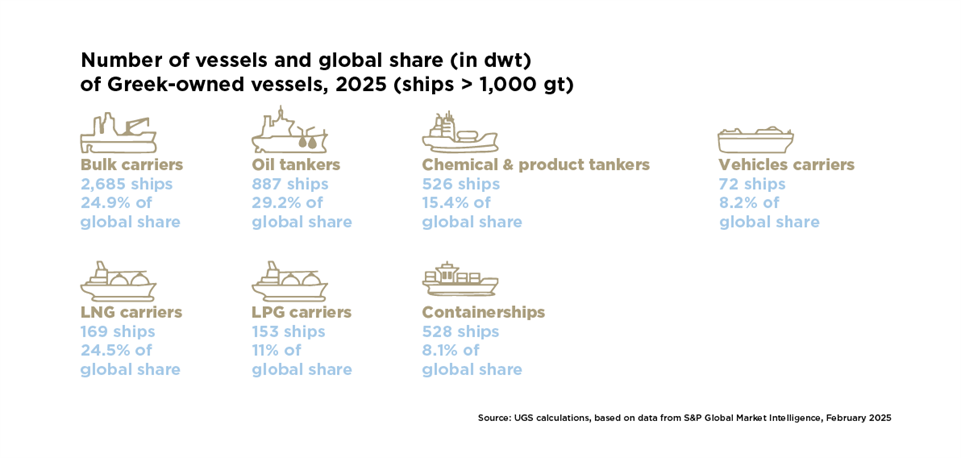
The shipping industry is predominantly family-owned, which compresses decision-making and allows rapid fleet redeployment in response to market conditions. When Hormuz traffic normalises or controlled passage resumes at elevated freight rates, Greek operators are positioned to capture a disproportionate share of that demand.
The Achilles Shield missile defence programme, the trilateral security framework with Cyprus and Israel, the Lebanon donation, the Souda Bay upgrades — these were decisions made before the crisis. Athens understood that geography is an asset only if the capability and the relationships exist to make it useful, and the Iran conflict has confirmed that calculation.

Comments